Is Surgery Necessary for Every SLAP Tear in the Shoulder? Understanding Treatment Options and When Surgery Is Required
Shoulder pain can make even simple daily activities difficult, whether it is lifting your arm, reaching overhead, getting dressed, or participating in sports. One possible cause of persistent shoulder pain is a SLAP tear, an injury involving the labrum, which is the ring of cartilage surrounding the shoulder socket.
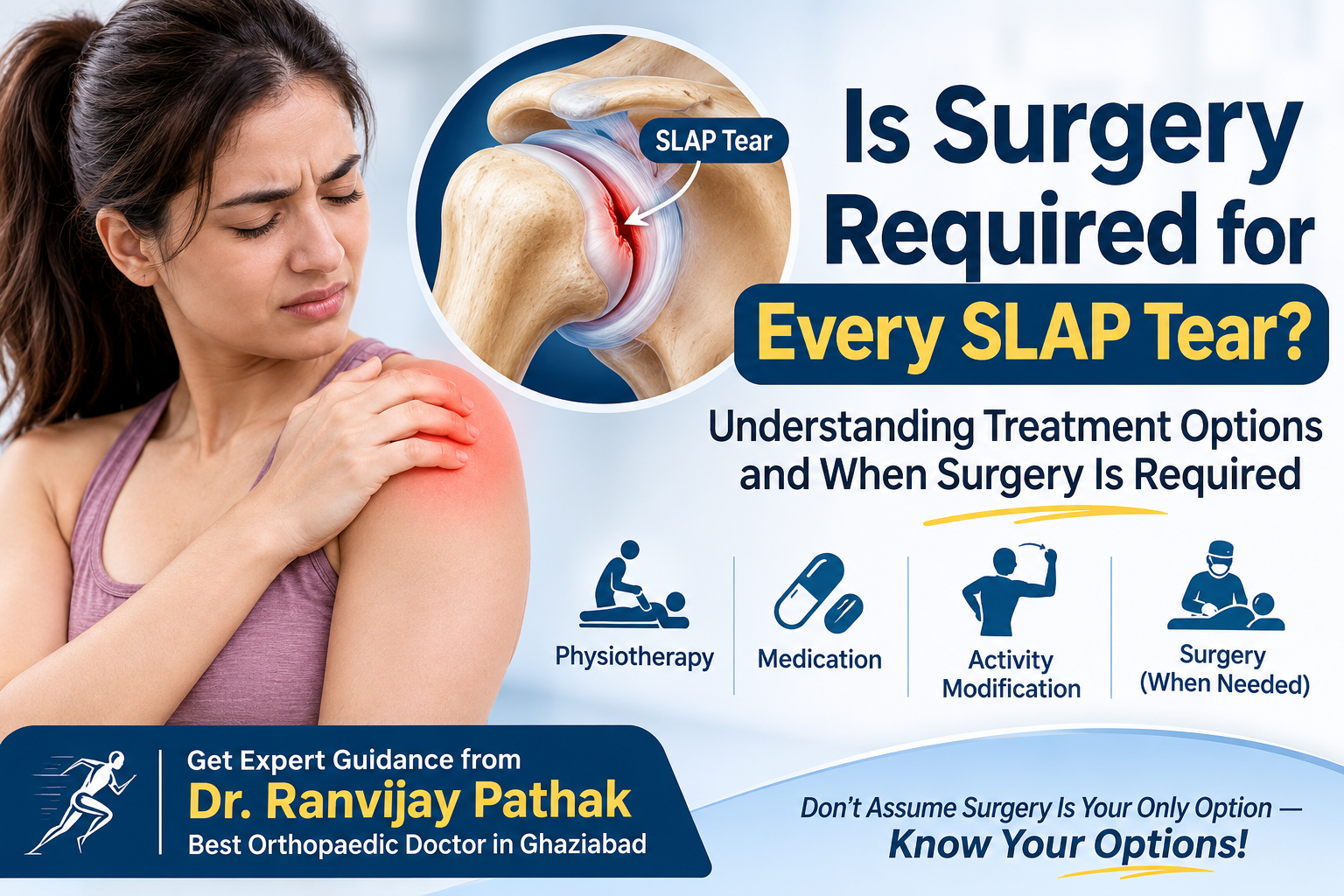
When patients receive an MRI diagnosis of a SLAP tear, one of their first concerns is whether they will need surgery. However, the good news is that not every SLAP tear requires shoulder surgery. Many patients can experience significant improvement through non-surgical treatments, including physiotherapy, activity modification, and appropriate medication.
The right treatment depends on several factors, including the type and severity of the tear, the patient’s age, activity level, associated injuries, and response to conservative treatment.
If you are experiencing persistent shoulder pain, understanding your treatment options can help you make informed decisions. Consulting an experienced orthopaedic specialist, such as Dr. Ranvijay Pathak, can help you understand your condition and explore an appropriate treatment plan.
1. What Is a SLAP Tear in the Shoulder?
SLAP stands for Superior Labrum Anterior to Posterior. It refers to an injury affecting the upper portion of the labrum, a strong ring of cartilage that surrounds the socket of the shoulder joint.
The shoulder is a ball-and-socket joint. The upper arm bone (humerus) fits into a relatively shallow socket called the glenoid. The labrum helps deepen this socket, improve joint stability, and provide attachment for important structures, including the long head of the biceps tendon.
A SLAP tear occurs when the upper part of this cartilage becomes damaged or separates from the shoulder socket. Depending on the injury, the tear may also involve the attachment of the biceps tendon.
SLAP tears are commonly seen in:
- Athletes involved in overhead sports.
- People who regularly lift heavy weights.
- Individuals performing repetitive overhead movements.
- People who experience a sudden shoulder injury.
- Adults experiencing age-related changes in shoulder cartilage.
Not every SLAP tear causes symptoms. Some people may have a tear visible on an MRI without experiencing significant pain or functional limitations.
2. What Causes a SLAP Tear?
A SLAP tear can develop gradually due to repetitive stress or occur suddenly following an injury.
Some common causes include:
1. Repetitive overhead movements
Activities such as swimming, tennis, volleyball, and baseball involve repeated overhead shoulder movements. Over time, these movements can place stress on the upper labrum and biceps tendon attachment.
2. Heavy weightlifting
Lifting heavy weights, particularly during overhead presses, bench presses, and other demanding shoulder exercises, can place excessive stress on shoulder structures when performed with improper technique or excessive loading.
3. Falling on an outstretched arm
A fall where a person tries to protect themselves by extending their arm can transmit force through the shoulder joint and potentially injure the labrum.
4. Sudden pulling injuries
A sudden forceful pull on the arm can place tension on the biceps tendon and its attachment to the labrum, potentially resulting in a SLAP injury.
5. Age-related degeneration
As people grow older, the labrum and surrounding tissues may undergo natural degenerative changes. In some individuals, these changes can appear as a SLAP tear on imaging.
Identifying the underlying cause is important because treatment recommendations may differ between an acute traumatic injury and a degenerative labral tear.
3. Is Surgery Necessary for Every SLAP Tear?
No, surgery is not necessary for every SLAP tear.
In most cases, doctors initially recommend non-surgical treatment, particularly when the injury does not cause significant shoulder instability or severe functional limitations.
The presence of a SLAP tear on an MRI does not automatically mean that surgery is required. The imaging findings must be evaluated alongside the patient’s symptoms, physical examination, medical history, and activity requirements.
For example, someone with a minor degenerative SLAP tear and manageable shoulder pain may improve with physiotherapy and activity modification. On the other hand, an athlete with persistent pain, significant functional limitations, and a traumatic labral injury may require surgical evaluation.
The decision generally depends on:
- Type and extent of the SLAP tear.
- Severity and duration of shoulder pain.
- Whether the biceps tendon attachment is involved.
- Presence of other shoulder injuries.
- Age and physical activity requirements.
- Response to non-surgical treatment.
According to the American Academy of Orthopaedic Surgeons (AAOS), non-surgical treatment is generally the initial approach for SLAP injuries. Surgery may be considered when symptoms do not improve with conservative management.
Therefore, patients should not rush into surgery simply because an MRI report identifies a SLAP tear.
4. Can a SLAP Tear Heal Without Surgery?
Yes, many patients with SLAP tears can improve without undergoing surgery.
However, it is important to understand the difference between structural healing and symptom improvement.
A torn labrum may not necessarily return to its original anatomical condition without surgical repair. Nevertheless, patients can experience substantial improvements in pain, shoulder strength, mobility, and everyday function through appropriate rehabilitation.
Non-surgical treatment aims to:
- Reduce shoulder pain and inflammation.
- Restore normal shoulder movement.
- Improve the strength of surrounding muscles.
- Improve shoulder blade control and stability.
- Reduce stress on the injured structures.
- Help patients return to regular activities.
The success of conservative treatment depends on the injury, associated conditions, and consistency with rehabilitation.
Patients should follow a structured treatment plan rather than continuing painful exercises or ignoring persistent symptoms.
5. Non-Surgical Treatment Options for SLAP Tears
For many patients, conservative management is the first step in treating a SLAP tear. The treatment approach is individualised according to the injury and the patient’s symptoms.
A. Physiotherapy
Physiotherapy is one of the most important components of non-surgical SLAP tear treatment.
A qualified physiotherapist may recommend exercises designed to improve shoulder mobility, strengthen supporting muscles, and restore joint function.
Rehabilitation may include:
- Gentle shoulder range-of-motion exercises.
- Rotator cuff strengthening.
- Shoulder blade stabilisation exercises.
- Flexibility exercises.
- Gradual strengthening of the surrounding muscles.
The exercise programme should progress gradually. Exercises that increase pain or aggravate the injury should be reviewed by the treating professional.
B. Activity Modification
Certain movements can increase stress on the injured labrum. Temporarily avoiding activities that aggravate symptoms can help reduce irritation.
Patients may need to modify:
- Heavy overhead lifting.
- Repetitive throwing movements.
- Certain gym exercises.
- Activities involving sudden pulling or twisting.
- Sports that require repeated overhead movements.
Activity modification does not necessarily mean complete inactivity. The objective is to maintain safe movement while allowing the shoulder to recover.
C. Medication
Doctors may prescribe anti-inflammatory medication or pain-relieving medicines when appropriate to manage symptoms.
These medications can help reduce pain and inflammation, making rehabilitation more comfortable. However, they do not physically repair a torn labrum.
Medication should only be taken according to medical advice, particularly in patients with existing stomach, kidney, or other health conditions.
D. Cold Therapy
Applying an ice pack wrapped in a towel to the affected shoulder for short periods may help reduce discomfort, particularly after activities that aggravate the symptoms.
Avoid placing ice directly on the skin.
E. Gradual Return to Activities
Once pain and movement improve, patients can gradually return to their normal activities.
A structured rehabilitation programme helps rebuild strength and improve shoulder control. Returning to heavy lifting or sports too quickly may aggravate symptoms.
6. When Is SLAP Tear Surgery Recommended?
Although many SLAP tears can be managed without surgery, some patients may require an operative procedure.
An orthopaedic surgeon may consider surgery when:
1. Persistent shoulder pain
If shoulder pain continues despite an appropriate course of physiotherapy, medication, and activity modification, further evaluation may be necessary.
2. Failure of conservative treatment
Patients who do not experience meaningful improvement after a structured non-surgical treatment programme may be considered for surgery.
3. Significant functional limitations
If the injury prevents a person from performing essential daily activities, working comfortably, or participating in sports, surgical treatment may be discussed.
4. Associated biceps tendon injury
Some SLAP tears involve the attachment of the long head of the biceps tendon. Depending on the extent of the injury and symptoms, the surgeon may recommend a procedure that addresses the biceps tendon.
5. Significant traumatic injury
Certain acute injuries, particularly those associated with instability or other structural damage, may require earlier surgical assessment.
It is important to remember that surgery is not recommended based on MRI findings alone. A detailed clinical evaluation is necessary before making this decision.
7. Types of SLAP Tear Surgeries
When non-surgical treatment does not provide sufficient relief, an orthopaedic surgeon may recommend shoulder arthroscopy.
Shoulder arthroscopy is a minimally invasive surgical technique that uses a small camera and specialised instruments inserted through small incisions.
The specific procedure depends on the type of SLAP tear, the patient’s age, activity level, and condition of the biceps tendon.
A. SLAP Repair
During SLAP repair, the surgeon reattaches the torn labrum to the shoulder socket using small anchors and sutures.
This procedure is generally considered in selected patients, particularly when the labral tissue is suitable for repair.
B. Labral Debridement
Debridement involves removing unstable or damaged portions of the labrum.
It may be considered in selected cases where repairing the tissue is not necessary or appropriate.
C. Biceps Tenodesis
Biceps tenodesis involves detaching the long head of the biceps tendon from its original attachment at the labrum and reattaching it to the upper arm bone.
This procedure may be considered in patients with certain symptomatic SLAP tears involving the biceps tendon, depending on individual clinical factors.
Not every patient requires the same surgical procedure. The surgeon determines the most appropriate option after evaluating the shoulder.
8. How Long Does It Take to Recover From a SLAP Tear?
Recovery time varies depending on the severity of the injury and whether the patient undergoes surgical or non-surgical treatment.
Recovery Without Surgery
Patients undergoing conservative treatment may begin noticing improvement over several weeks.
However, a structured physiotherapy programme may continue for approximately 3 to 6 months, depending on the patient’s progress and functional requirements.
The recovery process generally involves:
- Reducing pain and irritation.
- Improving shoulder movement.
- Restoring muscle strength.
- Gradually increasing activity levels.
- Returning to sports or demanding physical activities when appropriate.
Recovery After Surgery
Recovery after SLAP tear surgery generally takes longer.
Patients may need to wear a sling for a period of time to protect the repaired structures. The duration depends on the surgical procedure and the surgeon’s instructions.
Rehabilitation usually progresses through different stages:
- Initial protection: The shoulder is protected while the repaired tissue begins healing.
- Mobility restoration: Gentle, supervised movements are introduced.
- Strengthening: Exercises gradually improve shoulder and rotator cuff strength.
- Functional rehabilitation: Patients work towards returning to normal daily activities.
- Sports-specific rehabilitation: Athletes gradually prepare for higher-demand movements.
Returning to sports or heavy lifting should only happen after appropriate clinical assessment and rehabilitation.
9. Can You Return to Sports and Normal Activities Without Surgery?
Yes, many people with SLAP tears can return to regular activities and some sports without surgery.
The outcome depends on the type of injury, the severity of symptoms, the demands of the sport, and the patient’s response to rehabilitation.
For example, a person with a mild symptomatic tear who responds well to physiotherapy may be able to return to gym workouts and recreational sports without undergoing an operation.
However, athletes involved in throwing sports or activities requiring repetitive overhead movements may need more specialised rehabilitation.
Returning to sports too early can increase the risk of recurring pain and further irritation.
A gradual return-to-sport programme should focus on:
- Restoring full or functional shoulder mobility.
- Improving rotator cuff strength.
- Developing shoulder blade stability.
- Improving movement coordination.
- Gradually increasing training intensity.
Patients should follow their orthopaedic specialist’s and physiotherapist’s recommendations before returning to demanding activities.
10. Frequently Asked Questions About SLAP Tears
Q1. Can a SLAP tear heal naturally?
A SLAP tear may not completely heal anatomically on its own. However, many patients experience significant improvements in pain and shoulder function through physiotherapy, medication, and activity modification.
Q2. How serious is a SLAP tear?
The seriousness depends on the type of tear, associated injuries, symptoms, and impact on shoulder function. Some tears cause minimal symptoms, while others can significantly affect movement and physical activities.
Q3. Can I go to the gym with a SLAP tear?
You may be able to continue selected gym activities, but exercises that aggravate shoulder pain should be avoided or modified. Consult your orthopaedic specialist before continuing heavy lifting or overhead exercises.
Q4. Is physiotherapy enough to treat a SLAP tear?
Physiotherapy can be effective for many patients, particularly those without significant instability or associated injuries. However, some patients may require surgery if symptoms persist despite appropriate rehabilitation.
Q5. How long does SLAP tear recovery take without surgery?
Recovery varies between individuals. A structured physiotherapy programme may continue for approximately 3 to 6 months, depending on the injury and response to treatment.
Q6. Does every SLAP tear visible on an MRI require treatment?
No. Some SLAP tears are incidental findings, particularly in people with age-related changes. Treatment decisions should be based on symptoms, physical examination, and overall shoulder function rather than MRI findings alone.
Get Expert Guidance for SLAP Tear Treatment in Ghaziabad
Shoulder pain should not be ignored, especially when it interferes with daily activities, exercise, or sports. However, receiving a diagnosis of a SLAP tear does not automatically mean that you need surgery.
The most appropriate treatment depends on the nature of the injury, the severity of symptoms, and your overall shoulder health. An accurate diagnosis and individualised treatment plan can help you understand whether conservative management or surgical intervention is appropriate.
If you are searching for the best orthopaedic doctor in Ghaziabad for shoulder pain, sports injuries, or SLAP tear evaluation, consider consulting Dr. Ranvijay Pathak, an orthopaedic and joint preservation surgeon with experience in arthroscopic procedures and sports injury management.
Dr. Ranvijay Pathak holds MBBS and MS (Orthopaedics) qualifications, along with fellowship training in Arthroscopy and Arthroplasty Surgery. His areas of clinical interest include joint preservation, sports injuries, arthroscopic surgery, and minimally invasive orthopaedic procedures.
An appropriate consultation can help patients understand their diagnosis, discuss available non-surgical and surgical options, and make informed decisions about their shoulder health.
Do not assume that surgery is your only option. Get your shoulder evaluated and understand the treatment approach best suited to your condition.